Now Reading: Old Gems: Marmaduke Comic
-
01
Old Gems: Marmaduke Comic

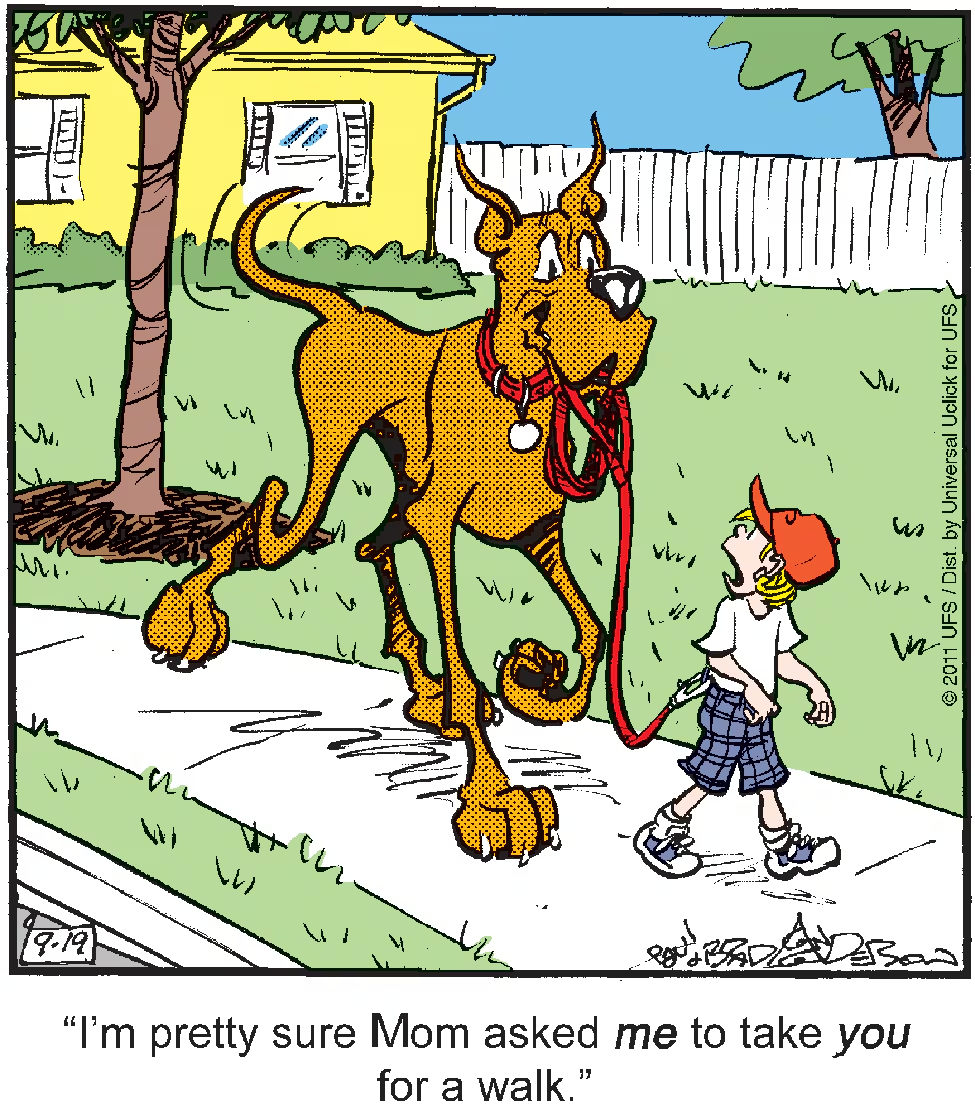
There are comics that make you laugh because they are clever, and there are comics that make you laugh because they are timeless. The Marmaduke comic belongs proudly in the second category. Any seasoned fan of newspaper strips knows that some series depend on elaborate setups or dense wordplay.
Marmaduke, on the other hand, has always relied on one thing: the irresistible comedic magnetism of a gigantic Great Dane who behaves with the enthusiasm of a hyperactive puppy. It is simple. It is chaotic. It is pure comic comfort food. Rediscovering the Marmaduke comic feels like pulling an old, treasured volume off the shelf. The ink may fade, but the charm never does.
The Birth of the Marmaduke Comic
Brad Anderson created the Marmaduke comic in the early fifties, during an era when newspaper readers embraced light humor as a daily ritual. Anderson grew up around dogs and always found humor in their exaggerated behavior. He understood the hilarious physics of a large dog in a small living room.
That understanding became the seed for Marmaduke. When the comic debuted, readers immediately recognized a relatable piece of their own lives. Anyone who had ever lived with a playful dog saw a familiar glint in Marmaduke’s massive eyes.
Why the Marmaduke Comic Works
The Marmaduke comic thrives because of one essential truth: large dogs do funny things simply by existing. Marmaduke does not need clever monologues or philosophical commentary. His comedy lives in the absurdity of a creature the size of a small horse trying to squeeze into a family sedan or attempting to sit politely on a human lap. For comic fans, this is a beautiful demonstration of visual storytelling. The humor lands before the reader sees a single word.
Another reason the strip works is its commitment to everyday family humor. The Winslows are not superheroes or detectives or talking vegetables. They are a typical suburban family trying to keep their home intact while a colossal canine constantly disrupts their sense of normal. The result is a warm, domestic kind of chaos that readers across generations relate to.
Recurring jokes are part of the fun. Marmaduke stealing food is practically a sacred tradition at this point. His size becomes the punchline in countless strips. His friendly menace terrifies strangers but melts instantly when he encounters something adorable. These repeating themes give longtime fans the familiar pleasure of returning to a favorite game.
The Characters Who Bring Marmaduke to Life
At the center of the strip stands Marmaduke himself. He is huge, enthusiastic, expressive, and completely unaware of his own size. His personality shines through every pose. Sometimes he is proud. Sometimes he is confused. Sometimes he is guilty in the most dramatic way possible. His emotional range is a big reason the comic remains so beloved.
The Winslow family acts as the stable anchor for this whirlwind of canine chaos. Phil and Dottie Winslow try to maintain order, while their children experience the daily joys and disasters of living with a massive pet. They embody the eternal struggle between human plans and pet unpredictability.
Supporting characters provide additional layers. Neighbors, mail carriers, other pets, and the occasional unlucky visitor all serve as comedic foils. Marmaduke’s interactions with them create many of the strip’s most memorable moments.
Style and Evolution of the Marmaduke Comic
Brad Anderson’s art style deserves real admiration from comic geeks. His line work is clean and expressive. Marmaduke’s anatomy bends and stretches in ways that emphasize movement and emotion. A raised eyebrow, a guilty slouch, or an explosive burst of energy can be understood without a single caption. Anderson mastered the craft of making a static drawing feel alive.
As the strip evolved over the decades, the art adjusted subtly. Lines became slightly cleaner. Background details simplified in order to shine more attention on the characters. Despite the changes, the core visual identity never drifted away. Marmaduke always looked like Marmaduke. For comic fans, that visual consistency is deeply satisfying.
Cultural Legacy of the Marmaduke Comic
For many years, the Marmaduke comic was a daily companion in newspapers across the United States. Families flipped open the comics section and expected to see that familiar giant dog waiting for them. The comic became part of morning routines, school lunches, and lazy Sunday afternoons.
The popularity of the strip naturally led to merchandise. Collections of Marmaduke comics filled bookstore shelves. Calendars featured the dog in all his oversized glory. Eventually, the character made his way to the big screen. The film adaptation introduced Marmaduke to a new generation, proving that even in a digital age the character still draws attention.
Marmaduke also influenced many later works that feature pets as comedic stars. The idea of taking an ordinary animal trait and pushing it to humorous extremes can be traced through numerous modern cartoons. Marmaduke helped build that blueprint.
How Fans Enjoy the Marmaduke Comic Today
Readers who want to revisit the Marmaduke comic do not have to hunt through old newspaper piles. Digital archives, comic strip libraries, and official collections make it easy to explore the entire history of the series. Modern fans share classic panels on social media, and younger readers discover Marmaduke through online platforms. The strip has found a comfortable home in the digital space, where nostalgia thrives.
Conclusion
The Marmaduke comic is proof that great humor does not need complexity. All it needs is heart, charm, and a gigantic Great Dane with absolutely no awareness of personal space. The comic has entertained readers for decades by celebrating the lovable chaos that pets bring into our lives. Rediscovering Marmaduke is like opening a time capsule filled with warm laughter. It reminds us that some jokes never age. They simply wait for new readers to appreciate them.
FAQ:
1. Who created the Marmaduke comic?
The Marmaduke comic was created by Brad Anderson, a cartoonist who had a lifelong fascination with the humor found in everyday pet behavior. His love for dogs and his sharp observational eye shaped the entire personality of the giant Great Dane.
2. When did the Marmaduke comic first appear?
The strip debuted in the early fifties and quickly became a regular feature in newspapers across the United States. Readers connected immediately with the simple and chaotic charm of the enormous dog.
3. What makes Marmaduke so funny?
Marmaduke’s humor comes from visual exaggeration and pure canine enthusiasm. The comedy does not rely on complex plots. Instead, it thrives on the absurd image of a dog the size of a small pony trying to behave like a typical household pet. It is visual slapstick at its finest.
4. Who are the main characters in the strip besides Marmaduke?
The Winslow family plays a central role. Phil and Dottie Winslow, along with their children, react to Marmaduke’s daily antics. Their attempts to maintain order create much of the comic’s humor. Side characters such as neighbors and mail carriers also appear regularly.
5. Is Marmaduke based on a real dog?
Although Marmaduke is not a direct copy of a specific dog, Brad Anderson drew inspiration from the many dogs he encountered throughout his life. He combined traits from different breeds and personalities to create one unforgettable canine character.










Related Posts
Stay Informed With the Latest & Most Important News
Previous Post
Next Post








Advertisement